
 Who are we l Community projects l Our team l Awards
Shimba Hills Botanical Garden (Conservation & Education):
Conservation & Education
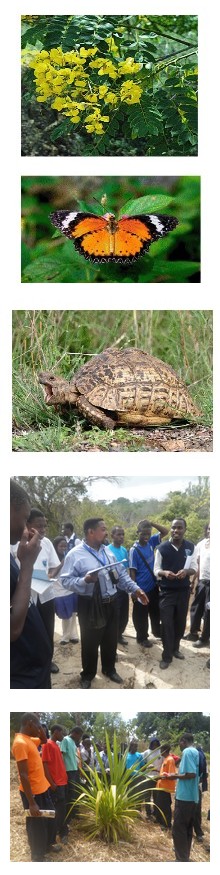
The Shimba Hills Botanical Garden is not just a place of great beauty; it is a legacy for future generations. The Garden’s collections and education programs help to raise awareness of the importance of preserving the earth’s biodiversity, with conservation becoming an increasingly important element of the Gardens’ mandate. Relaying this knowledge to the public, especially children, ensures that all visitors understand the importance of being environmentally responsible. Shimba Hill Botanic Garden’s role in conservation is to ensure that the Garden’s collections support educational programming related to conserving plant biodiversity and environmental sustainability. Conservation oriented programming aims to encourage the public to play a role in protecting and valuing the earth and all living things.Plant Collections
Collections at Shimba Hills Botanical Garden feature over 300 different species of plants from all over the world most being local. As a documented genetic resource these plants are used for public education and are available for use by visiting researchers. Some plants at the garden are basically on research while others are on international medical research. These includes croton megalocarpus, Kigelia Africana, Piliostigma thonningii and many more including King Alfreds Cake (Daldina concentric) mushroom that is being researched for a vaccine for HIV in China among many other plants.At Shimba Hills Botanic Garden we have tagged our plant according to, the Plant scientific name, the Family, the Common Name and the Swahili name including the uses of the plant locally and internationally.
Collections in the Garden include plants from particular families or genera, such as Cycads, Acacias, Orchids, Fungi/mushrooms, creepers and climbers, Euphorbias ( a very big family), Palms, lilies, Meru oak (vitex keniensis) Podo (podocarpus falcatus) Elgon Teak, Prunus Africana, bamboo, Commelinaceae family ,perennials, grasses, herbs and ferns.
The Botanic garden also has a small display of tree fossil dating to about 200 million years and now coming up with a butterfly house.
Future
Just as any organization we seek to assist the local community and we have plans to build a community library, a gallery, and herbaria. We also intend to come up with a scholarship fund for students who lack school fees. In these cause we also seek donations in cash and in kind such as used books and just any type of help. Together we will make a beautiful world.Book through the Director, Cell: 254 0714 437020 or through Mlilo Community Tours & Safaris.